
How to Velvet Beef — and Why It Changes Everything
The first time I made beef and broccoli at home, the flavors were fine. But the beef? Chewy, tough, nothing like the silky strips from our go-to takeout place down the block. I tried recipe after recipe over the years and kept hitting the same wall — until I learned how to velvet beef.
Cook’s Illustrated is where I first came across this technique — and once I tried it I understood immediately why professional kitchens swear by it. If you’ve ever wondered why restaurant stir fry beef is so impossibly tender while yours turns out chewy and dry, velveting is the answer. I’ve been using it ever since, and it is one of the most useful things I’ve ever added to my weeknight cooking repertoire.
What is Velveting Beef?
Velveting is a Chinese cooking technique that involves marinating thinly sliced beef in a mixture of egg white, cornstarch, and a few pantry staples, then briefly blanching it in salted water before stir frying. The marinade forms a thin protective coating on the meat that keeps it tender and silky through the high heat of cooking — giving you that signature texture you thought was only possible from a restaurant kitchen.
The traditional method uses hot oil for blanching, which is how restaurants do it. This home version uses boiling water with a splash of oil added, and the result is remarkably close.
How to Make Velveted Beef
The process has two stages — the marinade and the blanch — and most of the time is hands-off.
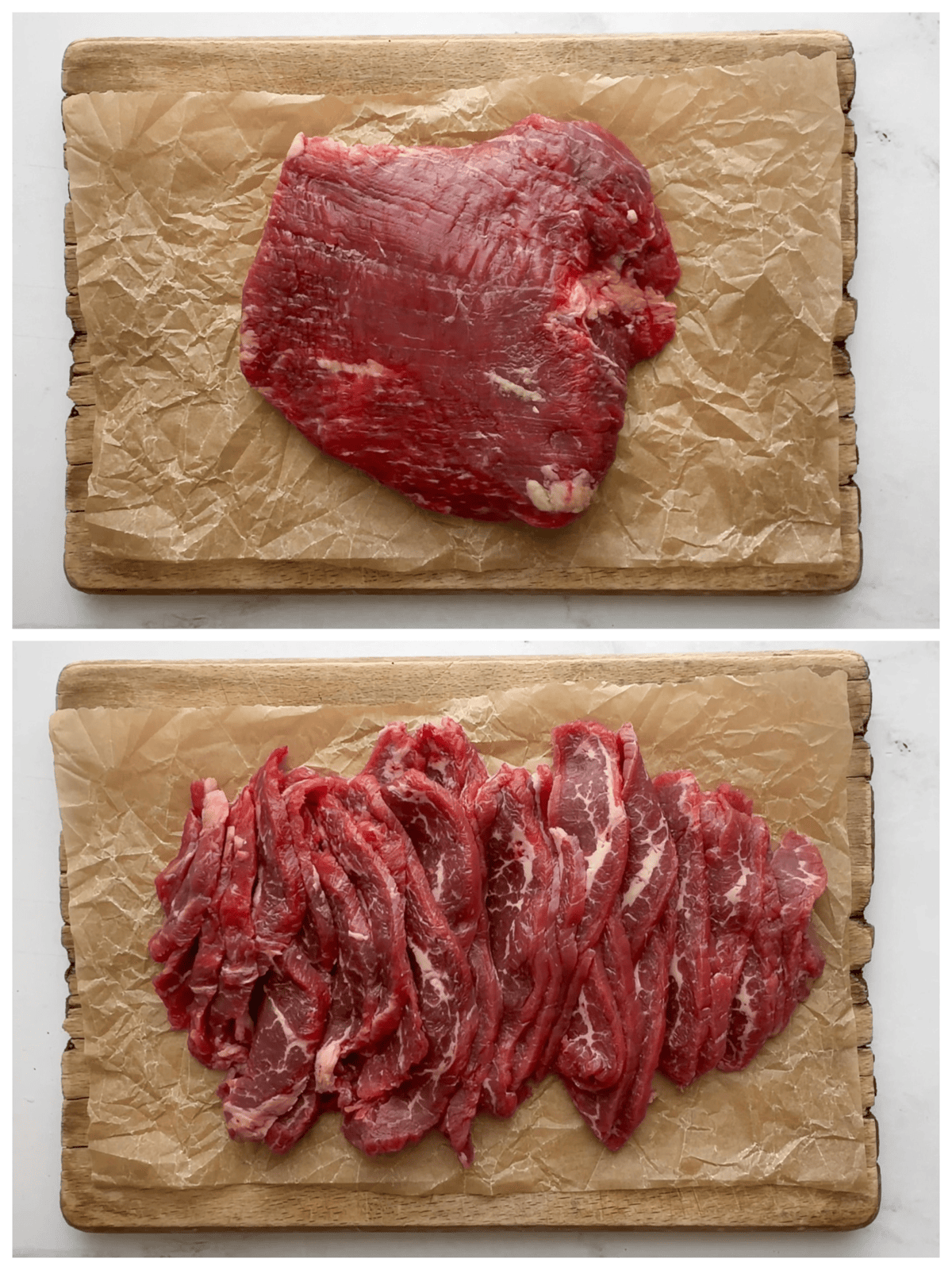
Start by slicing your flank steak very thinly against the grain. This is the most important step and it’s worth taking your time — thin, even slices mean even cooking and maximum tenderness. Pat the meat dry before you begin.
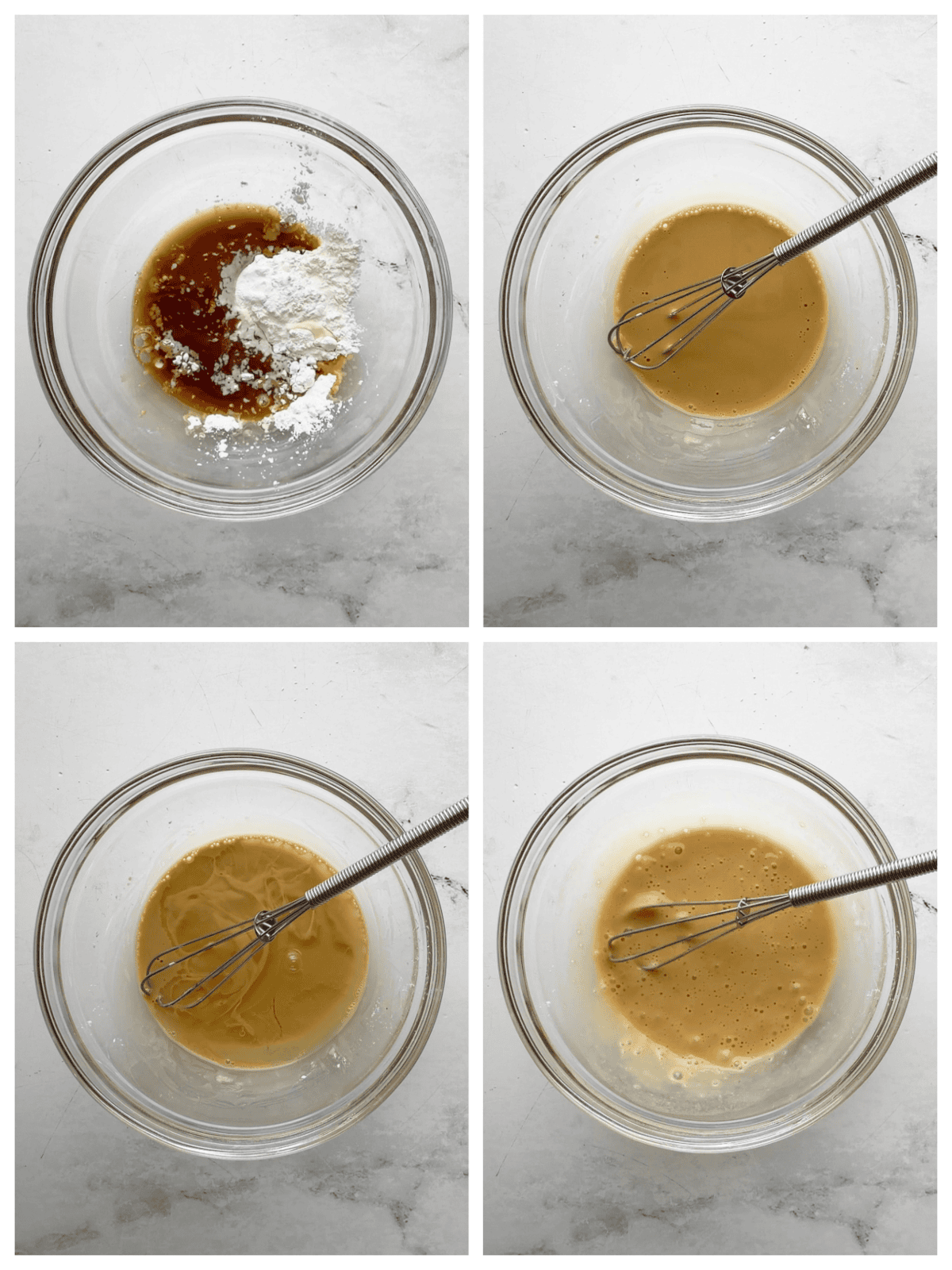
Whisk together the cornstarch, soy sauce and rice vinegar until smooth, then whisk in the egg white until just combined — you want it incorporated but not frothy. Add the beef to a zip-top bag, pour in the marinade, and squish everything together until each piece is well coated. Refrigerate for 30 to 60 minutes — or up to 24 hours if you want to get ahead.
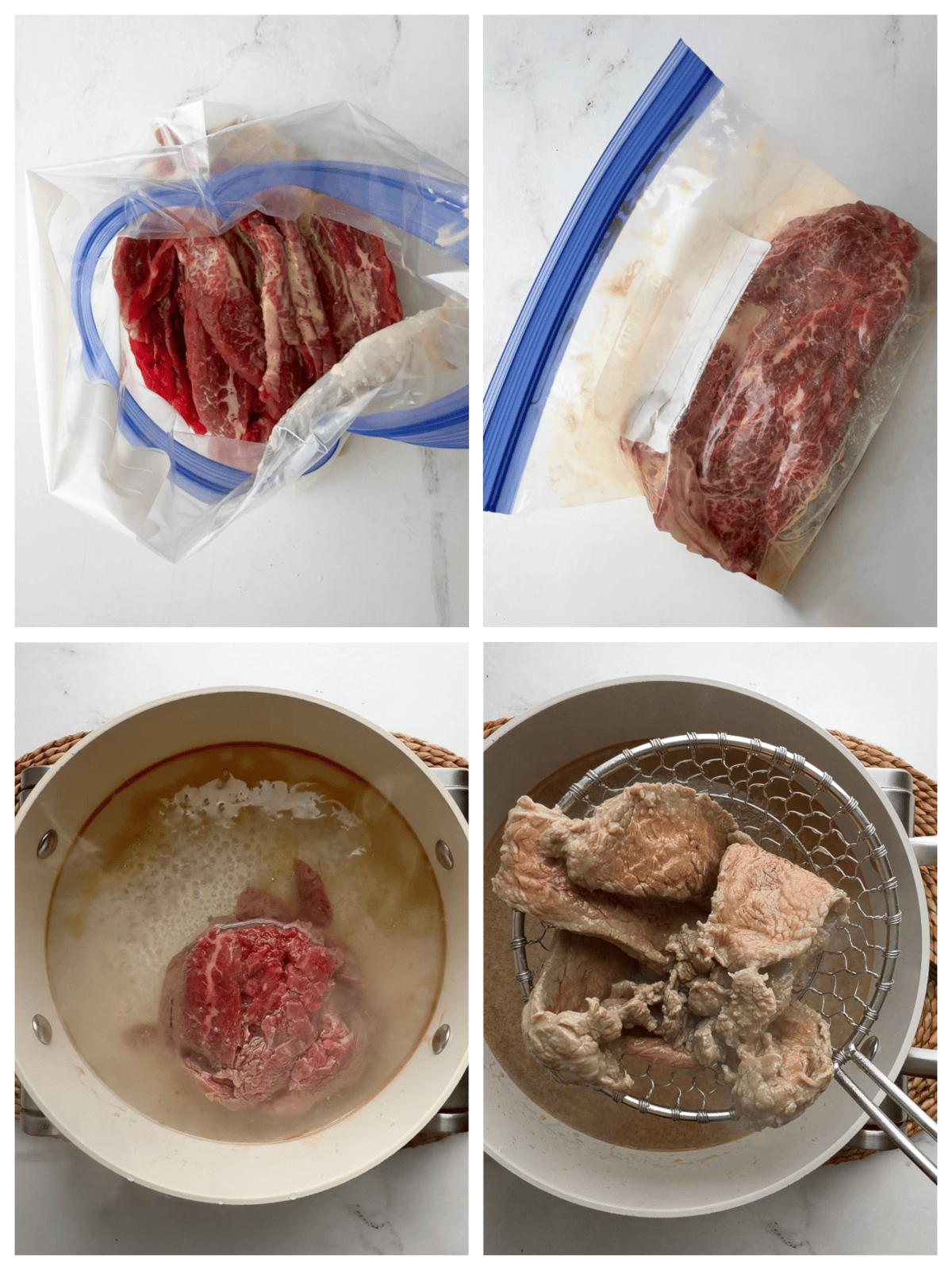
When you’re ready to blanch, bring a pot of water to a boil with the salt and oil. Cook the beef in batches — about 30 seconds per batch — removing with a slotted spoon and transferring to a colander. Let the water return to a full boil between batches. Don’t worry if the beef looks slightly undercooked at this stage. That’s not only fine — it’s exactly right. It will finish cooking in the stir fry, and pulling it at this point is what keeps it tender rather than tough.
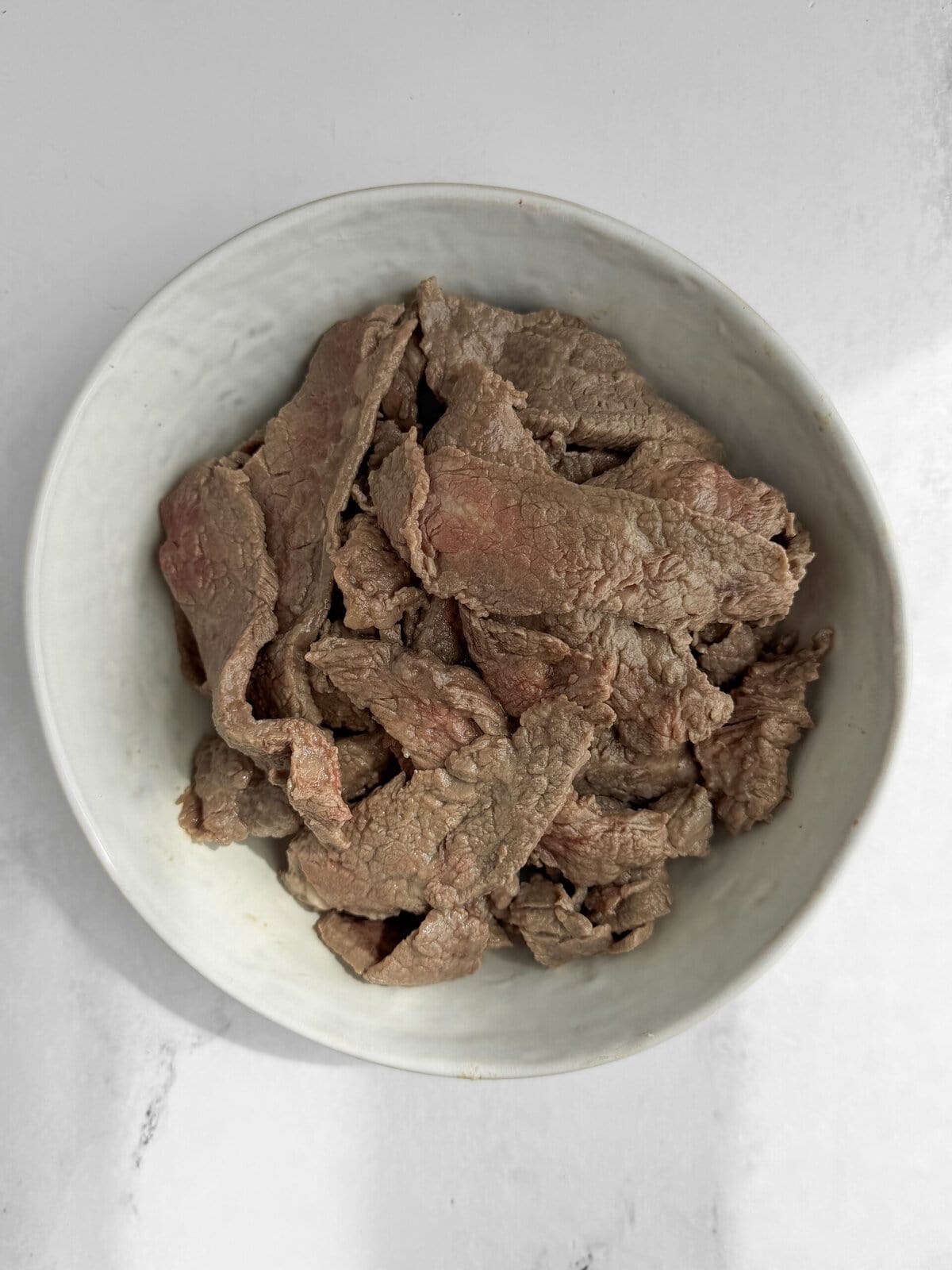
Use the velveted beef immediately or refrigerate overnight and use the next day. Do not freeze — the texture won’t survive it.
Tips for the Best Velveted Beef
Slice against the grain and slice thin. This is non-negotiable. Cutting with the grain leaves long muscle fibers intact and the beef will be chewy regardless of the velveting. Look for the direction the fibers run and cut perpendicular to them, as thin as you can manage.
Don’t whisk the egg white to frothy. You want it just incorporated into the marinade — overbeating introduces too much air and affects the coating.
Cook in batches and let the water return to a boil. Adding too much beef at once drops the water temperature and you end up steaming rather than blanching. Thirty seconds per batch in truly boiling water is the move.
The beef will look underdone after blanching — that’s correct. Pull it at this stage. It finishes in the stir fry and if you cook it through in the blanching step it will be overdone by the time it hits the pan.
Make ahead options:
- In the marinade: up to 24 hours in the fridge
- After blanching: up to 2 days in the fridge, well covered
- Freezing: not recommended — the texture suffers
Beef with Broccoli

Ingredients
For velveting the beef:
- 1 pound flank steak, patted dry and very thinly sliced against the grain
- 4 teaspoons cornstarch
- 1 tablespoon soy sauce
- 1 tablespoon rice vinegar
- 1 egg white
- 1 tablespoon kosher salt
- 1 tablespoon sesame oil
For the beef with broccoli:
- 2 tablespoons soy sauce
- 1/4 cup oyster sauce
- 1/2 tablespoon chili-garlic sauce, or to taste, optional
- 1/2 cup plus 1 tablespoon grapeseed oil, divided
- 1 pound broccoli, cut into florets
- 2 tablespoons unsalted butter
- rice, to accompany
Instructions
Velvet the beef:
- Place steak in a large ziploc bag. Whisk the cornstarch, soy sauce and vinegar in a small bowl till smooth. Whisk in the egg white till well combined but not frothy. Add this mixture to the meat and squish the bag so that each piece is well coated. Refrigerate for 30 - 60 minutes.
- Bring 4 cups water, salt and oil to a boil in a medium pot. Cook the meat in 3 batches, for 30 seconds each batch, removing with a slotted spoon and transferring to a colander. Make sure the water returns to a boil between batches. Use immediately in your recipe or refrigerate overnight.
Make the beef with broccoli:
- Whisk the soy sauce, oyster sauce and chili-garlic sauce in a small bowl. Add 1 tablespoon water and whisk again; set aside.
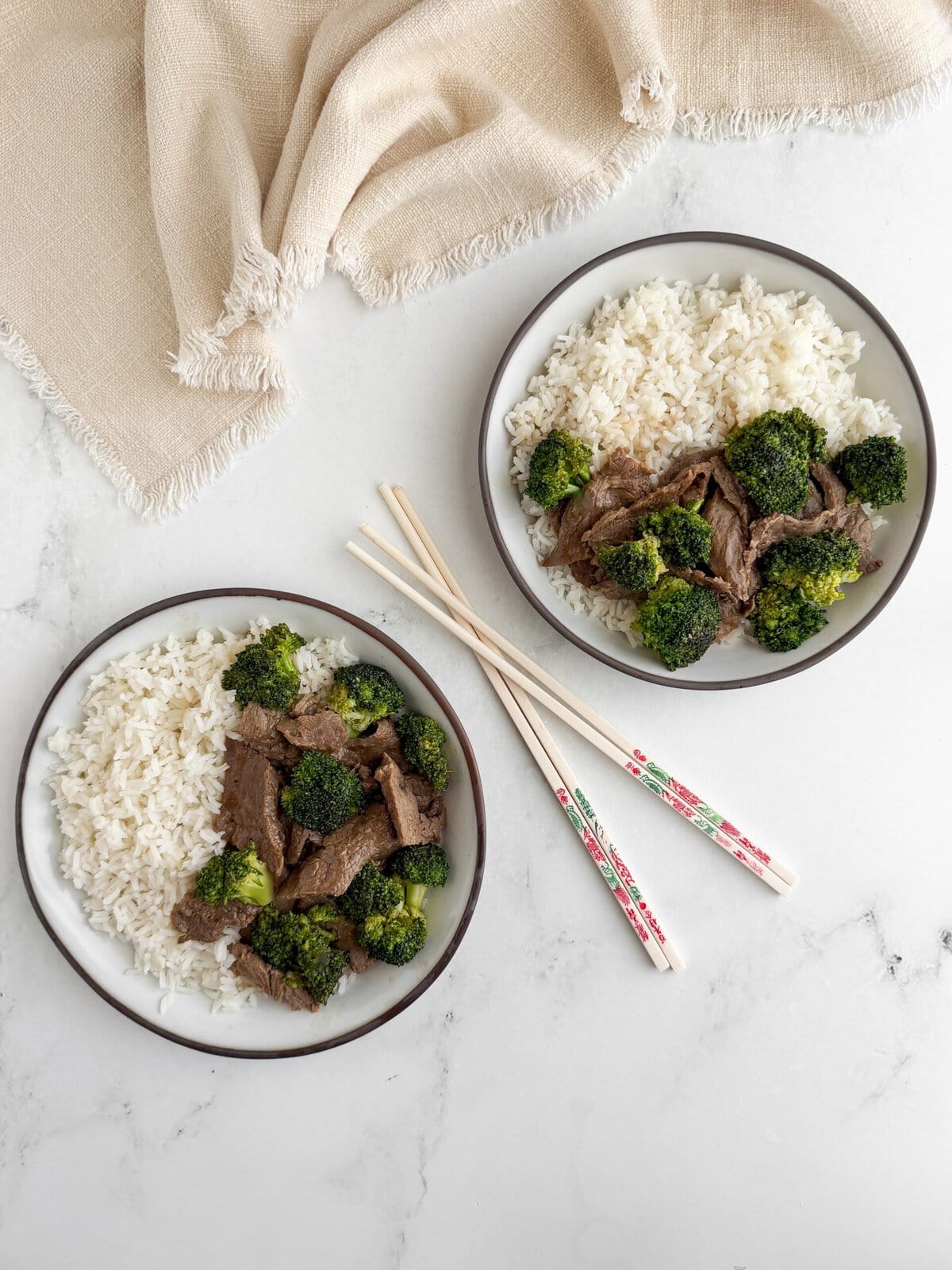
- Heat 1/2 cup grapeseed oil in a large pan set over high heat. Saute the steak in 2 batches, transferring to a plate or bowl when finished. Pour off the oil and wipe out the pan. Add the remaining tablespoon oil and heat till smoking. Saute the broccoli, stirring frequently, for 2 - 5 minutes - it should be lightly charred in spots. Add 2 tablespoons water and toss for another 2 minutes. Return the steak to the pan, followed by the sauce. Stir frequently till well coated, then add the butter and continue stirring. Serve with rice.
Notes
- Don't panic if the blanched beef looks slightly undercooked — that's exactly right. It finishes cooking in the stir fry.
- The beef can marinate in the velveting mixture for up to 24 hours in the fridge.
- After blanching, refrigerate overnight and use the next day. Do not freeze — the texture won't recover.
Nutrition
Frequently Asked Questions
Can I use this technique on other proteins? Yes — chicken, pork and fish all respond well to velveting. The timing stays roughly the same though fish will need less time in the marinade — 15 to 20 minutes is plenty.
Can I use baking soda instead of egg white and cornstarch? Baking soda is another common velveting method and it works well, but the timing is more critical — don’t exceed 2 hours or the texture becomes unpleasantly mushy. The egg white and cornstarch method in this recipe is more forgiving and can go up to 24 hours.
Do I have to blanch in water — can I use oil? Oil is the traditional restaurant method and gives a slightly silkier result, but it requires a large amount of oil and careful temperature management. The water method is nearly as effective and much more practical for home cooking.
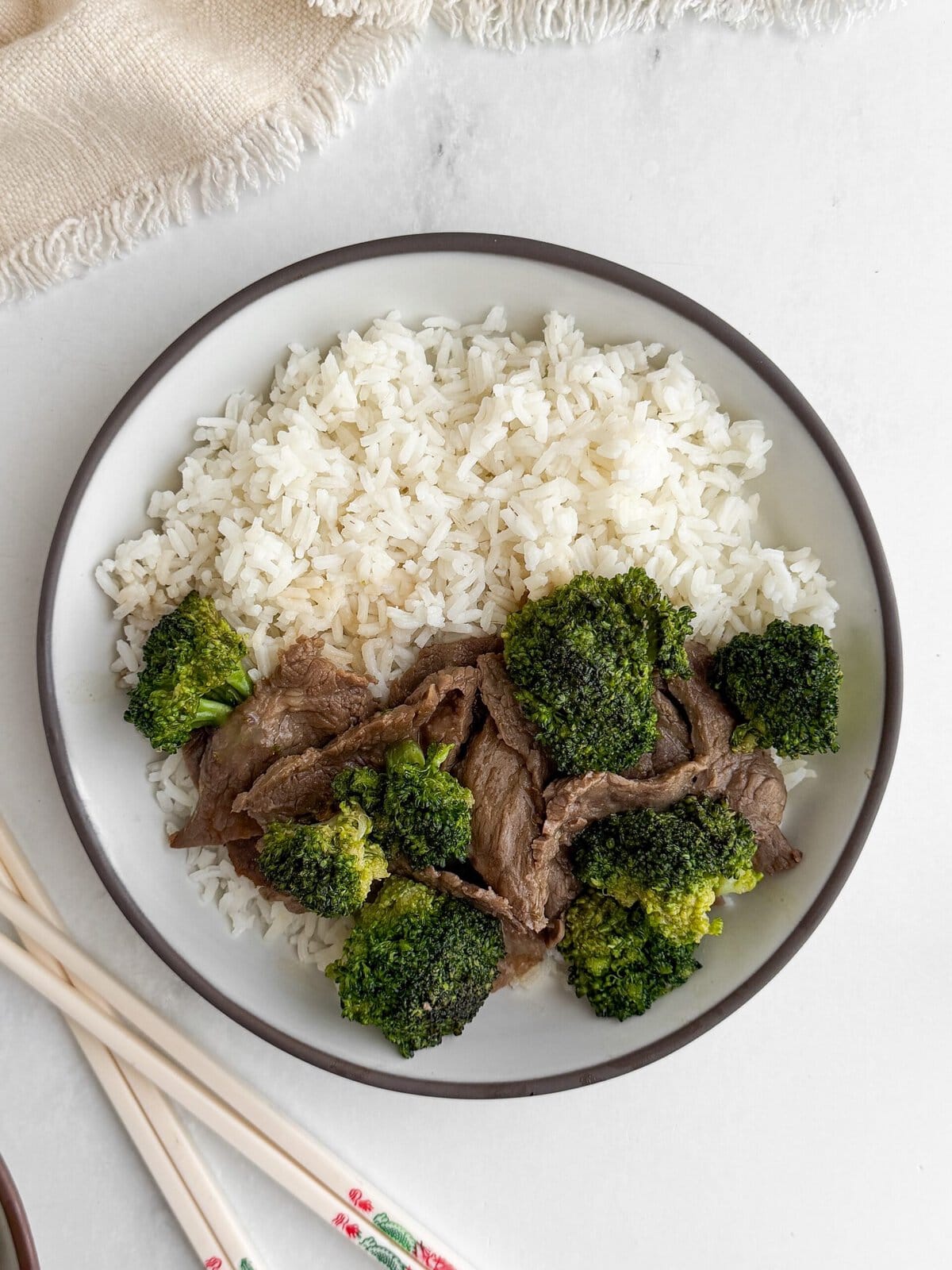
Once you velvet beef you will never go back to cooking stir fry without it. Try it in the beef and broccoli recipe below first — and then use the technique in any stir fry recipe you love. Let me know how it goes!



25 Comments
Leave a Comment

Hi! I'm Sheri!
Welcome to my little corner of the web where you’ll find easy, delicious recipes, the best kitchen hacks and simple tips for turning your home into a clean haven that is free of toxins. So glad you’re here!


What if you want to velvet beef stripes for dishes other than Chinese.?
You can not only use this technique for any type of dish as well as almost any type of protein!
Do you substitute the soy sauce and sesame oil with anything else, or just leave those ingredients out entirely?
Audrey, you can leave out the soy sauce as it is strictly a seasoning in this case & has no effect on the velveting process. The oil, while imperative, does not have to be sesame oil. Any oil can be substituted.
If you don’t want to make it Chinese-y do you substitute the soy sauce and sesame oil with anything else, or just leave those ingredients out entirely?
I would sub olive oil for the sesame oil and you could leave out the soy or maybe a red wine vinegar in its place? The main ingredients at play in velveting are the cornstarch and egg white. Let me know what you use!
I have an egg allergy, any idea what kind of substitution I could make for the egg in the velveting of the beef?
I’ve never tried it in this recipe but if you Google “aqua faba” you’ll learn that chickpea water (from canned chickpeas) can make a great substitute for egg whites – I’ve actually made vegan meringues right here using it! So I bet it might work for this recipe!
You can get the same effect with baking soda. The goal is to use the alkalinity to tenderize the meat.
Thank you for that suggestion!
Egg whites are not required for velveting. For each pound of thinly sliced meat, try 2 teaspoons each of cornstarch & oil of choice plus 1/4 teaspoon of baking soda and 2-3 tablespoons of water and combine very well. Seasonings may be added but are not necessary. The above recipe is for beef; if using other meat or seafood, leave out baking soda.
Thank you for this! 🙂
Thanks! A soupçon of wine or sherry vinegar sounds good.
YES!
I cant believe i didnt know about this as i cook asian / chinese 1-2 times a week ive done this now on chicken and prawns and tonight the beef is in the fridge and this has been my missing technique to a restaurant quality asian meat dish.WOW amazing Thank you.
Ah yay! I’m so glad! I know, this has made SUCH a difference and I’m thrilled you thought so too – thank you for sharing!!!
This is my 2nd time following this recipe. First time was yummy so made it again. This time meat is so salty that it is inedible. I have no idea what I did wrong. Any suggestions? Even with the rice cant negate the saltiness enough.
Hm – did you use a different soy sauce? I’m very sensitive to sodium and definitely notice a difference. Take a look at the ingredients you used and see if maybe there was an uptick in sodium. And let me know!!!
Can you velvet the meat and then freeze it? We are going camping
Yes! Just be sure to defrost before proceeding with the recipe. I’ve never done it personally but let me know how it turns out!
Dumb question:
If i use Mirin instead of Rice Wine….will it be ok? Or too sweet…
I’ve never used Mirin but I would agree that it might be too sweet!
Nvm, just saw your cook’s illustrated quote says rice wine, you used rice vinegar. I’ll stick with rice wine, seeing as it’s ph is 3.5-4.5, rice vinegar is ph of 2-3….which would probably negate the alkaline effects of the corn starch and egg whites. Food is fun 🙂
Wow I never thought about that! I will keep that in mind the next time I make this. I think I assumed that, given the small amount that the difference would be negligible. Thank you for this!
Regarding eggwhite/cornstarch vs baking soda: I use baking soda for most stir-frys because it works faster. and I am going to make a sauce for the dish. In fact, you must respect its speed by keeping the portion of BS small and the time meat is exposed short. I generally do not marinade in BS more than 30 minutes., often less unless it is a tough cut like bottom round. If you wait too long the BS imparts a somewhat unattractive taste to the meat and worse makes the texture of the meat too soft, mealy, unattractive. But done properly it works great and quickly.
I find the EW/CS method requires more time relative to the amount of ingredients involved, which is great for those instances where you want to impart strong marinade flavors deep into the meat. In that case you want more time on the meat anyway, and the less powerful EW/CS methods does not endanger the texture.